
 Català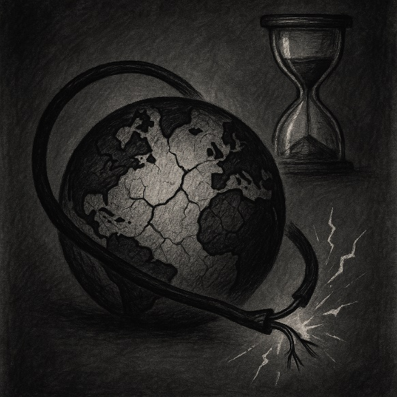
We are living in a great energy paradox. Despite having clear and irrefutable data on the imminent depletion of fossil fuels, the reality of this problem remains persistently and deliberately hidden. We continue to act as if we have all the time in the world, when in fact, the clock is ticking against us. We are talking about resources that took 400 million years to form and will be exhausted in just 50 to 100 years from now. Oil—the most decisive resource for the global energy system—has a significant useful life that will not extend beyond half a century, while coal and natural gas might last a bit longer, between 100 and 150 years. This, in evolutionary terms, is a short and immediate horizon.
And yet, society remains unaware. And it is unaware because the truth is not being told. Public opinion has been anesthetized, distracted, or directly manipulated so as not to perceive the true abyss that is approaching. This lack of social awareness is, in fact, one of the main obstacles to the deep energy transformation that is urgently needed.
Another factor that contributes to this confusion is the false sense of progress generated by the concept of the «energy transition,» promoted by many governments and institutions over recent decades. But the reality is that after more than thirty years of speeches, agreements, and action plans, it is still unclear what the exact origin or the destination of this transition really is. The concept has been emptied of real content and turned into a slogan, rather than an operational and verifiable strategy.
All of this must be placed within the historical and economic context of the last 150 years, during which the world of energy has been an immense source of wealth and power. The control of energy sources—oil, gas, coal—has determined wars, alliances, empires, and overthrows. These resources have generated deeply entrenched interests in all stages of their life cycle: extraction, refinement, transport, distribution, and consumption. It is a system of power, not merely a technical system.
And as with all entrenched systems of power, vested interests become barriers to evolution. The very actors who have enriched themselves and consolidated their dominance over the fossil-based energy model are today those who block or manipulate any real alternative. Whether to maintain control, out of fear of losing influence, or for short-term gain, political and economic interests are a clear and identifiable brake on the transformation the planet needs.
Governments, both in democracies and in authoritarian regimes, are highly reactive and operate in short cycles, often electoral, which prevent planning with a 50- to 100-year horizon. But energy does not understand legislatures—it moves in centuries. This structural myopia results in a failure to allocate the resources and political will necessary for deep transformations. Moreover, pressure from financial markets, lobbies, and the immediate need for economic growth mean that any proposal not generating short-term profit is either ignored or dismissed. This chronic deficit of strategic planning and intergenerational responsibility is, undoubtedly, one of the greatest bottlenecks to seriously addressing the transition toward a truly sustainable and resilient energy model.
At the end of the 20th century, many advanced societies—led by Europe—decided to gradually abandon nuclear energy, aware of the enormous risks it entailed. The traumatic experience of Chernobyl (1986), and later Fukushima (2011), made it clear that no matter how advanced the technology, accidents could have catastrophic and irreversible consequences for the environment and human health.
Beyond operational risks, the issue of highly radioactive nuclear waste—which takes centuries to neutralize and requires the construction of permanent nuclear repositories—reinforced the idea that this could not be considered a clean or safe energy source in the long term.
But today, silently and without rigorous public debate, decommissioned nuclear plants are being reopened and mini-nuclear plants promoted as if nothing had happened. The path once discarded for well-founded reasons is being resumed simply to avoid blackouts and maintain the illusion of control. This attitude calls into question the real responsibility of governments and their capacity to manage the future with a global vision, as they act driven by immediacy, ignoring unnecessary risks and overriding the precautionary principle.
This return to nuclear has even been endorsed by European institutions, which—in a highly controversial decision—have included nuclear energy in the “clean energy” category according to the new green taxonomy. This decision, taken more for political and industrial interests than for scientific or genuinely sustainable criteria, completely distorts the concept of green energy and contributes to public confusion. To declare «clean» an energy source that can generate environmental catastrophes and radioactive waste lasting centuries is a political and moral irresponsibility. This situation raises questions about the legitimacy of international institutions as guardians of the planet’s future and reinforces the need for independent, responsible, and truly sustainable models like the one proposed by Sunthereum.
This document is the result of a long process of reflection and research that I began in 2018, when I started to analyze in depth the global energy situation and its structural dependence on fossil fuels. This dependence, still dominant today, is at the root of the problem: oil, coal, and natural gas are finite resources, and their progressive depletion is not only inevitable—it is much closer than is commonly admitted.
Oil, in particular, is the vital nerve of our civilization. It is the source that powers most transportation, industry, agriculture, and even systems that seemingly have no direct link to it. The soberest estimates suggest that within less than 50 years, oil will cease to play a significant role in energy generation. This horizon of progressive collapse demands a determined and anticipated response.
Yet the reality is that no consistent, stable, and lasting alternatives are being found that can replace fossil fuels with equal capacity and reliability. And this absence of a structural solution is what constitutes the risk I have called BSE – Blackout Stage Energy: a systemic blackout, first gradual, then recurring, and finally massive, that will affect every aspect of modern life unless the global energy matrix is completely reconfigured.
Among the figures who have decisively contributed to rethinking the future of humanity’s energy, three names stand out for their impact, structural vision, and ability to transform paradigms: Stephen Hawking, Elon Musk, and Markus Real.
Stephen Hawking not only repeatedly warned about the existential risk posed by global energy depletion—alongside other threats such as climate change, uncontrolled artificial intelligence, or nuclear war—but also outlined a clear line of action for humanity’s survival: if we want to endure beyond the next few centuries, we must seek the energy necessary to sustain life in space. In some of his most visionary writings, he even speculated about the possibility of extracting energy from black holes, as an extreme symbol of the exploration of energy sources beyond the current limits of our planet. This idea, which may seem utopian today, opens the door to an interplanetary and cosmic conception of sustainability, which forces us to rethink the boundaries of classical energy thought.
Elon Musk, for his part, has been the practical executor of this emerging awareness. With a long-term action vision, he has bet on technological reuse, on a decentralized energy architecture, and on building the foundations of a multiplanetary civilization. His work in fields such as electric transport (Tesla), domestic solar energy (SolarCity), space exploration (SpaceX), and artificial intelligence and communications technologies has shown that it is possible to act with boldness, vision, and structural ambition in the face of the great challenges of the future. His work demonstrates that true innovation is not just about optimizing the present but about preparing humanity for an entirely different scenario, in which energy self-sufficiency is the condition for survival.
And finally—no less important—my friend Markus Real, a Swiss engineer and renewable energy pioneer, widely regarded as the father of distributed generation (DG), was the one who opened my eyes to a practical, open, and realistic vision of the energy world. It was thanks to him that I came to understand the Megawatt project in depth, the first large-scale urban implementation of distributed generation in the city of Zurich, based on 333 interconnected solar installations on building rooftops. This project not only proved that decentralized energy generation was viable and efficient, but also pioneered key concepts such as microgrids, smart management, and energy independence at the city scale. His vision and experience had a deep impact on me, leaving a direct imprint on the conception of the Sunthereum model.
From this double inspiration—philosophical and operational—I began shaping the concept of BSE – Blackout Stage Energy, which synthesizes the imminent danger: an energy crisis of structural dimensions, irreversible unless tackled in time with a systemic and decisive proposal.
That same inspiration, along with years of study and critical analysis, also led me to define the foundations of Sunthereum, as an energy architecture capable of offering a coherent, robust, and sustainable response to the civilizational challenge posed by the end of the fossil era.
And time is running out.
The signs of collapse are no longer predictions—they are beginning to manifest. On April 28, 2025, a singular episode occurred: a μBSE (micro Blackout Stage Energy) that affected large areas of Spain, Portugal, Andorra, and France. Although the causes have not yet been publicly clarified, the impact on daily life, essential services, and social risk perception was palpable. This episode is not anecdotal—it is a preview of what may come in increasingly shorter and more severe cycles if immediate structural measures are not taken.
The global energy system operates on a fragile balance, still predominantly reliant on sources with a clear expiration date. Inaction is not merely negligence—it is recklessness.
But not all is shadow.
We have a star—the Sun—that continuously emits a colossal amount of energy upon our planet. The most precise calculations indicate that the amount of solar energy reaching Earth in just one hour could cover the world’s energy demand for an entire century. This fact is not new, but it has traditionally been underestimated due to the difficulty of harnessing it on a planetary scale and due to pressure from fossil fuel interests.
It was from this diagnosis that I began to develop what I call Sunthereum. It is not a single project, nor a company, nor an isolated technology. It is an integrated model, composed of seven technological and strategic pillars which, if coordinated, can offer a stable and consistent energy solution for the coming centuries. A model that goes far beyond photovoltaic generation alone, because it understands that the future will require a decentralized, intelligent, robust, and adaptive energy architecture.
The seven pillars of the Sunthereum model, which we will detail in the corresponding chapter, are:
- Photovoltaic energy generation, as the inexhaustible and renewable source par excellence.
- Distributed generation, which allows breaking with the centralized and vulnerable logic of conventional energy.
- Energy storage, to balance generation and consumption and guarantee stability.
- Smart microgrids, to connect local sources and consumption in an efficient way.
- WET (Wireless Energy Transmission), to transmit energy wirelessly over distance and with high efficiency.
- SBSP (Space-Based Solar Power), which opens the door to solar energy generation from space, without night-time or weather interruptions.
- Blockchain, as a technology of trust, registration and decentralized management for a global, secure and transparent energy network.
This model, in its entirety, is not a utopia, but a necessity, if we want to avoid the disruptive scenarios that BSE can unleash.
These reflections and proposals do not arise from nothing. For more than three years now, these contents have been taking shape and have been periodically shared on the blog sunthereum.blogspot.com, which has served as a space for testing, dissemination and validation of the key ideas that are now presented here in a more structured and integrated way.
This document, therefore, is a call to awareness, to study and to action. Temporary patches are not enough, nor are empty political speeches. We need a systemic proposal, a next-generation energy architecture. Sunthereum aims to be exactly that: a compass and a basis for building an energy future worthy of that name.
It is from this diagnosis that I began to develop what I call Sunthereum. It is not a specific project, nor a company, nor an isolated technology.
Sunthereum is a systemic and modular energy architecture, conceived to replace the fossil fuel-based model through a new energy matrix based on the sun. It integrates technologies, strategies and governance methods to guarantee a generation, transport and distribution of energy that is decentralized, resilient, efficient and sustainable over centuries.
It is based on seven interconnected technological and strategic pillars which, when working in a coordinated manner, offer a structural and lasting response to the global energy challenge.