
 Català
When changing the name changes the reality we perceive
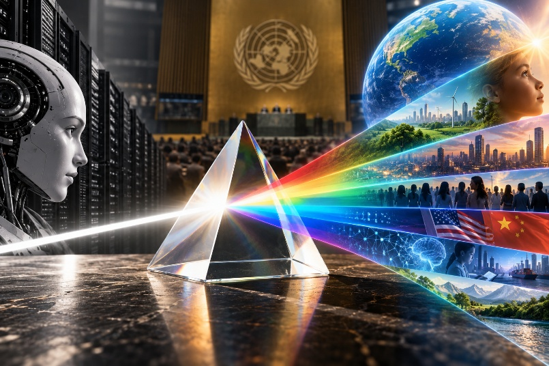
Words accompany us with a discretion that often conceals their power. We use them to recognize things, distinguish them, organize them, and share them with others, and in this process each word accumulates meanings, relationships, experiences, and expectations. When we say home, border, progress, war, freedom, or intelligence, we evoke a reality and, at the same time, activate a particular way of accessing it. Language thus constitutes one of the fundamental structures through which we turn the immensity of the world into a reality that we can understand, relate, and transmit. To name something means to give it a place within our mental universe.
This capacity becomes especially visible when a reality receives a new name. The object may retain its material properties, continue to occupy the same place, and function exactly as it did an instant before, while the new designation modifies the relationships we establish with it. A word can bring it closer to concepts that until then remained distant, alter the expectations we project onto it, make certain characteristics visible, and place others in the background. The change occurs in the territory of perception and, from there, can continue its journey into collective language, decisions, institutions, and the ways in which a society organizes its understanding of the world.
History offers countless examples of this capacity of language, but our time allows us to observe it almost in real time. We live surrounded by concepts that acquire a speed of circulation unknown until very recently. An expression uttered on a political stage can cross borders within minutes, become a headline, enter a conversation, pass into an official document, and begin to modify the vocabulary through which millions of people interpret the same reality. Along this journey, words carry much more than a definition: they carry a particular arrangement of meanings.
Artificial Intelligence constitutes a privileged case for observing this phenomenon. For decades, these two words have brought together very different technologies, aspirations, fears, promises, and imaginaries. Today they form part of the everyday language of hundreds of millions of people and designate, with surprising ease, realities as diverse as a language model, a vision system, a recommendation mechanism, an autonomous agent, or an infrastructure capable of integrating many of these functions. The term has acquired a force of its own because it makes it possible to condense enormous technological complexity into two words that almost everyone recognizes, even though each person may fill them with a different image.
And then, in the midst of this technological transformation, an apparently simple proposal appears: replace one of these two words. Keep Intelligence and change Artificial to Super. Two expressions separated by a single adjective, applied essentially to the same technological universe, yet capable of placing it within two different conceptual landscapes. The move invites us to observe a question that reaches far beyond terminology and that will accompany us throughout these pages: what happens to a reality when we change the place from which we think about it?
1. Two Words in New York
On September 22, 2026, before the 81st United Nations General Assembly, Donald Trump introduced an apparently small modification in the midst of a speech devoted to much larger issues. When speaking about Artificial Intelligence, he announced that the United States would henceforth officially refer to it as Super Intelligence. The formulation was explicit: Trump announced that, from that moment on, United States documents should use the term super instead of artificial, a designation the president considered more precise. The White House itself included the change in the official summary of the speech, and Trump added an aspiration that considerably broadened the scope of the proposal: he hoped that the world would eventually adopt that new designation as well.
The setting contributed to giving weight to the gesture. Those words were spoken in New York, before the principal international political assembly, at a moment when the technology we have grouped under the initials AI already occupies a central place in economic, scientific, and geopolitical competition. Trump also explained the criterion that had led him to prefer the new term: the word artificial, according to him, could make that intelligence seem fake, while the technology was very real and extraordinarily powerful. His proposal therefore consisted in shifting the name from the origin of the intelligence—an intelligence built by human beings—toward a quality attributed to its capacity. In a single linguistic operation, artificial gave way to super.
We can observe the moment from a certain distance and note a singular characteristic of what had just happened. As that sentence crossed the General Assembly hall, the models retained their parameters, the data centers maintained their power, the algorithms performed the same functions, and the agents possessed the same autonomy. The vast technological system to which those words were applied remained, an instant later, the same as it had been an instant before. The change had taken place somewhere else: in the proposed way of naming it. And that place, apparently immaterial, forms part of the territory from which human beings construct our relationship with things.
This turns the episode into something more interesting than a discussion about terminology. If Artificial Intelligence and Super Intelligence can initially point to the same set of technologies, we can ask ourselves what each of the two expressions carries when it reaches our mind. Words summon relationships. One positions the object in relation to its origin; the other begins to position it in relation to its power. One invites us to think about what has been constructed; the other immediately opens the idea of a capacity that occupies a superior position. The machine retains its architecture while language begins to modify the conceptual architecture from which we contemplate it.
Here appears the question that really interests us. Time will show which designation ultimately prevails. Today we have a more immediate phenomenon to observe: two words applied to the same reality can place that reality in different locations within our mental universe. Between Artificial Intelligence and Super Intelligence there is only the replacement of one adjective. Between what each of those adjectives invites us to think, the distance can become considerable.
2. From Artificial to Super
The words artificial and super share an elementary characteristic: both need something with which to establish a relationship. What is artificial is so in relation to what we consider natural; what is superior is so in relation to another term that occupies a different position on a scale. This formal similarity contains two profoundly different conceptual movements. When we speak of Artificial Intelligence, we place the emphasis on origin: an intelligence produced through human activity, built with mathematics, algorithms, data, energy, machines, and accumulated knowledge. The adjective helps us place the object within a relationship that for decades we have expressed, with all its imperfections, as a distinction between natural intelligence and artificial intelligence. The center of gravity lies in its origin.
Super constructs a relationship of a different nature. Super Intelligence immediately introduces a scale. The prefix super- comes from Latin and retains an extraordinary capacity to suggest that which is above, that which exceeds, that which surpasses a magnitude, or that which occupies a superior position. Superpower, supersonic, superconductor, superstructure: in very different contexts, the prefix incorporates an idea of elevation, excess, or expansion. Applied to intelligence, this semantic force shifts the question. Attention moves from where that intelligence comes from toward what position it occupies in relation to other intelligences.
This shift is especially significant because human beings have an immediate reference with which to construct the scale: themselves. For a long time, the expression artificial intelligence has made it possible to imagine a fundamentally horizontal relationship between two origins: a human or natural intelligence and an intelligence created through artifacts. Super Intelligence facilitates a vertical arrangement. Where the first designation favored the axis natural ↔ artificial, the second can activate the axis human ↔ superhuman. The change of adjective thus reorganizes the coordinates with which we position the object, and this new conceptual geometry can influence the questions we address to it, the expectations we place upon it, and the position we attribute to ourselves in relation to it.
This effect acquires even greater depth because superintelligence was already in circulation before this episode with a meaning of its own in the literature on artificial intelligence. The term has been used to designate, with different formulations depending on the authors, an intelligence capable of broadly surpassing human cognitive capabilities across an extensive range of domains. For this reason, shifting Super Intelligence from a concept associated with a possible stage of development to the general name of a technological field produces a particularly intense semantic operation: a word that could indicate a certain future position within a scale comes to be presented as the designation of the whole. The imagined future and the technological present thus begin to share the same expression.
Here an essential property of language becomes apparent. Names allow us to point to things and, at the same time, relate them. Each designation incorporates the object into a constellation of meanings that already existed before that word was applied to it. When we replace artificial with super, we retain the noun intelligence and modify the system of relationships surrounding it. The technological object comes under a different light because the new adjective carries with it another family of associations: capacity, scale, superiority, acceleration, power. Language acts here as a first architecture, elementary but powerful, that orders the position of things even before we begin to reason explicitly about them.
For this reason, the move in New York deserves to be observed beyond its future terminological fortunes. The decisive question lies in the process it places before us: a minimal change in language can reorganize the conceptual relationships surrounding an object while the object itself retains its properties. And when this new designation leaves the instant of a speech and begins to penetrate documents, institutions, and the official language of a State, the phenomenon enters a different dimension. The word begins to acquire structure, continuity, and power.
3. When a Word Enters the State
A word spoken in a speech can fade away with the applause or begin a much longer journey. In this case, the journey continued. The proposal to replace Artificial Intelligence with Super Intelligence immediately began to move into American institutional language: diplomats from the State Department’s Bureau of International Organization Affairs received instructions to use the new designation in their communications related to international organizations. The gesture thus acquired a different nature. An expression formulated by the president was beginning to become administrative and diplomatic vocabulary. Institutions are also built with words: they draft laws, regulations, budgets, reports, strategies, treaties, and statements, and each of these documents contributes to stabilizing the categories through which the State interprets and orders the reality upon which it acts.
The journey acquired yet another dimension when Trump personally brought the new designation into his conversation with Xi Jinping. According to information published afterward, the American president explained to the Chinese president his preference for Super Intelligence. Subsequently, the Chinese Ministry of Foreign Affairs publicly stated that China attached importance to the American position and respected its terminological choice. Beijing thus preserved its own position regarding the vocabulary it would use, while the episode introduced a qualitatively new element: the designation had begun to cross the American institutional perimeter and had entered the language of the relationship between two great technological powers. A word spoken in New York thus began an observable sequence: person, Presidency, Administration, diplomacy, relationship between States.
This sequence allows us to observe how language acquires institutional capacity. A designation gains persistence when documents repeat it, gains extension when different agencies adopt it, and gains circulation when other actors have to relate to it, even if they retain their own designations. From there it can reach the media, companies, universities, regulatory bodies, and finally everyday conversation. Each stage expands the number of people who encounter the word already placed before them, available to think with. The process is especially relevant in a technology subject to such intense global competition, because States also participate in the construction of the vocabulary through which this competition will be explained, regulated, and socially perceived.
The institutional power of a word grows through this accumulation of uses. When an administration adopts a designation, it begins to appear in contexts that grant it continuity and authority. When it enters diplomacy, other actors must at least recognize it in order to respond to it. When the media reproduce the new term, millions of people come into contact with a conceptual relationship that until then may have belonged to specialized circles. Circulation gradually sediments meaning. A word can begin as a personal choice and end up becoming a piece of the shared cognitive landscape.
The case Artificial Intelligence → Super Intelligence therefore offers us something more valuable than a prediction about which acronym we will use a few years from now. It allows us to observe the process through which a designation begins to acquire institutional reality. The journey is being written and its destination remains open, while the mechanism is already visible: a word enters an institution, the institution provides it with continuity, diplomacy exposes it to other institutions, and public circulation expands the space in which that word can begin to order meanings. At this point, the question already goes beyond AI and SI. It takes us toward a much older and deeper faculty: the capacity of words to participate in the construction of the reality that a society comes to perceive.
4. Words Also Construct Reality
We live immersed in a reality immensely more extensive than the portion we can perceive, understand, and retain. To inhabit it, we need to order it, establish differences, recognize similarities, create categories, and relate the objects we find within it. Language participates decisively in this work. When we give something a name, we incorporate it into a network of meanings that allows us to think about it and share it with others. The word thus acts as a piece in the organization of knowledge: it concentrates previous experiences, summons associations, establishes proximities and distances, and offers a point from which to continue constructing thought. For this reason, a language constitutes much more than an inventory of available names; it is also an immense repository of accumulated relationships among things, an inherited cartography that each generation receives, transforms, and transmits.
This capacity becomes especially visible when we observe how two different designations can project different fields of meaning onto the same object. One word can bring a reality closer to the idea of progress, another to that of risk; one can place it in the territory of necessity, another in that of choice; one can present an action as an expense and another as an investment. In each of these cases, material reality retains its consistency while language reorganizes the relationships through which we access it. The selected word directs attention, activates certain questions, facilitates certain analogies, and prepares certain expectations. In this way, language intervenes at a very early stage of the cognitive process: it participates in the construction of the framework within which facts will acquire meaning.
This phenomenon acquires even greater importance when words become collective categories. A society needs shared concepts in order to deliberate, legislate, educate, invest, research, and decide. Words such as progress, security, development, crisis, sustainability, or intelligence make it possible to bring diverse phenomena together under the same designation and build discourses, institutions, and policies around them. Their effectiveness comes precisely from this capacity for condensation. Each term creates a common space in which many particular realities can be related, and this shared space facilitates collective action. At the same time, the category directs the gaze: what becomes related under the same name begins to be thought about together, and the properties we associate with the term can be projected onto the objects we incorporate into it.
The designation intelligence offers an especially rich example because it carries behind it millennia of human experience. Intelligence evokes understanding, learning, reasoning, memory, adaptation, anticipation, the capacity to solve problems and, in certain contexts, judgment. When this word is applied to a machine, all this semantic sediment also enters the scene. The technological object becomes related to a category that for centuries we have used primarily to understand human faculties and, by extension, those of other living beings. The adjective that accompanies it then modulates this relationship. Artificial places it in the territory of what is constructed; super projects it toward a scale of capabilities. In both cases, the designation gives an initial form to reality before we begin to examine in detail what each system does, how it does it, and how far its capabilities extend.
Here an important consequence appears. The words we use also guide the questions we can formulate more easily. Faced with artificial intelligence, we can ask ourselves to what extent it reproduces or simulates capabilities that we associate with natural intelligence; faced with superintelligence, the comparison of capabilities with human beings emerges almost spontaneously. A designation thus reorganizes the space of possible questions, and the questions then guide observation, research, and debate. The journey can continue all the way to decisions: what we perceive as an instrument, competitor, assistant, infrastructure, authority, or power gives rise to different ways of relating to it. Between the initial word and the final decision there is, therefore, an architecture of relationships that often operates with such naturalness that it almost becomes confused with reality itself.
It is precisely here that the problem broadens. A word constitutes one piece of a much larger structure. We also think through concepts that relate to one another, hierarchies that establish importance, experiences that provide precedents, causalities through which we explain events, criteria through which we evaluate them, and time horizons from which we measure their consequences. When all these pieces acquire a certain coherence, they form something deeper than a vocabulary: a structure from which reality becomes intelligible. It is at this level that we can begin to speak of Architectures of Thought.
5. From Words to Architectures of Thought
A word can direct the gaze, but we think with structures much broader than the words that express them. Faced with any reality, we set in motion learned concepts, accumulated experiences, causal relationships, analogies, criteria, values, hierarchies, and expectations; we decide which elements deserve attention, establish connections among them, and place them within a time horizon that allows us to interpret where they come from and where they may lead. Much of this activity takes place with extraordinary naturalness, because life has provided us over the years with the pieces through which we construct our way of understanding the world. Each new reality thus comes into contact with a preexisting structure that allows us to recognize it, order it, and incorporate it into the whole of what we already know. Thinking also consists in this capacity to establish relationships between what arrives and the architecture from which we receive it.
We can call Architecture of Thought (AT) this organized structure of concepts, principles, relationships, criteria, and horizons through which we observe, relate, and interpret a reality. The word architecture is especially appropriate here because it places the emphasis on organization. A set of accumulated concepts constitutes knowledge; an Architecture of Thought appears when these concepts establish relationships among themselves capable of systematically directing the gaze. As in a building, the pieces acquire function through the position they occupy and through the connections they maintain with the others. Some act as foundations, others provide structure, some open perspectives, and others make it possible to connect spaces that, contemplated separately, would seem independent. Its strength comes from the whole and from the coherence of the relationships that sustain it.
This distinction allows us to understand why two people who share the same facts can construct different and, at the same time, perfectly articulated interpretations. Each can select different aspects, attribute different importance to them, establish other causal relationships, or contemplate consequences within different time horizons. An economist, an anthropologist, an engineer, a historian, or a philosopher can observe the same phenomenon and discover different dimensions within it because each possesses conceptual instruments that make certain relationships visible. This plurality constitutes one of the great riches of human knowledge: each architecture expands the perceptible field from a particular position and can contribute dimensions that other perspectives place on a different plane.
Architectures of Thought can have very diverse origins. Some have been formed over centuries within a philosophical or religious tradition; others come from a scientific discipline, an economic school, a political theory, or the work of an author. They can also be deliberately constructed over time, incorporating concepts and relationships that ultimately shape a coherent system of observation. Aristotle, Confucius, Marx, Freud, Hayek, or Munger, from intellectual territories and with very different purposes, have left us sets of concepts and relationships that allow us to question a reality from specific angles. Using one of these architectures means posing to the object the questions that this way of thinking considers especially significant and observing which relationships appear when we apply them.
This introduces an especially fruitful possibility. An Architecture of Thought can move from an implicit structure, incorporated into our habitual way of thinking, to becoming an explicit instrument of observation. We can identify its concepts, describe the relationships it establishes, determine which questions it formulates, and consciously apply it to an object. At that moment, the gaze also becomes method. The same problem, a text, a business decision, a social transformation, or a technology can be observed successively through various architectures, and each will bring forth different relationships contained or potentially present in that same object. The plurality of perspectives thus acquires a structure that makes it possible to preserve the identity of each perspective and, at the same time, compare the results it produces.
At this point, we can briefly return to the two words that began our journey. Artificial Intelligence and Super Intelligence still constitute a very elementary modification: we have changed an adjective and seen how this change reorganizes some of the conceptual relationships surrounding the object. An Architecture of Thought operates on a much deeper scale. It incorporates articulated sets of concepts, relationships, causalities, criteria, and horizons that act jointly upon the way a reality is questioned. If a single word can already shift the position from which we contemplate a technology, it is easy to intuit the capacity of a complete architecture to reveal different dimensions of the same object.
This idea also constitutes the point from which a body of work developed over years under the name Architecture of Time and Power — ATP can be better understood. ATP is a specific Architecture of Thought, built around a particularly persistent relationship in human history: the one that exists between the distribution of power and the distribution of the time horizons from which individuals, organizations, and societies can think and act. It is from this specific architecture, and from the path it has progressively constructed, that we can take one further step in the question that concerns us.
6. ATP: A Specific Architecture of Thought
The Architecture of Time and Power arises from an observation that, over the years, has progressively unfolded its consequences: the distribution of power is intimately related to the distribution of time horizons. Individuals, organizations, and societies possess different capacities to project themselves into the future, preserve what has been built in the past, manage the present, and turn the available time into possibilities for action. Those who can think thirty years ahead operate in a different territory from those who need to solve tomorrow; those who possess accumulated memory face the present from a different position from those who possess a shorter horizon of memory; those who can wait, anticipate, postpone, or accelerate also possess a form of power. Time and power thus appear as dimensions that continuously intersect, and their relationship provides a perspective from which to observe phenomena that, contemplated separately, might seem to belong to independent territories.
Throughout its development, ATP has progressively turned this initial perspective into an architecture composed of domains that explore different manifestations of this relationship. Each domain concentrates part of the field of observation, develops its concepts, and establishes connections with the others, while the whole retains the same underlying architecture. This progressive construction allows a technological issue to be related to power, power to be observed through time, the present to be read with the help of memory, and long-term transformations to be examined beyond the immediate event that makes them visible. ATP functions, in this sense, as a structure of relationships that provides continuity to the perspective and makes it possible to question different objects through a coherent set of questions.
Considering ATP as an Architecture of Thought introduces a consequence that reaches beyond ATP itself. An architecture that can be described, delimited, and documented can also be consciously used as a prism of observation. We can take an external object—a text, a decision, a technology, a historical process, an economic transformation—and ask ourselves what becomes visible when we observe it through the relationships that that architecture considers significant. The object retains its identity and contributes its own facts; the architecture contributes the questions, relationships, and horizons from which those facts are examined. The result expands the cognitively accessible object because it brings forth connections that that particular way of looking makes it possible to recognize.
This conception also preserves an essential characteristic of any Architecture of Thought: its perspective is identifiable. ATP offers a particular perspective precisely because it has a particular architecture. Another AT can place the same object before other concepts, establish other relationships, and bring forth different dimensions. This plurality makes it possible to move from the accumulation of points of view to a more structured form of thought: we know from which architecture we are observing, we can preserve its traceability, and we can compare what different architectures make visible about the same object. Perspective thus becomes an explicit part of the process of knowledge.
From here, an especially fruitful question opens up. If we can identify the object we observe and also the architecture from which we observe it, we can study the cognitive transformation that takes place between the two. The metaphor of the prism appears almost naturally: a light enters, passes through a structure with particular properties, and emerges unfolded in a way that makes it possible to distinguish dimensions that previously traveled together. The light maintains continuity with its origin, and the prism participates in the form in which that light manifests itself after passing through it. Transferred to knowledge, this image leads us toward a territory with its own intellectual antecedents and with a history that should be recognized before continuing: Cognitive Refraction.
7. From the Prism to Cognitive Refraction
The idea that what we know reaches us transformed by the structures from which we interpret it runs through an important part of the history of thought, although authors have formulated it in different languages and also for different purposes. The hermeneutic tradition turned this question into one of its central territories. Wilhelm Dilthey situated understanding within the historical experience of the person who interprets; Hans-Georg Gadamer developed the idea that all understanding takes place from a prior horizon and that understanding implies a transformation of that horizon; Paul Ricoeur delved into the interpretive mediation through which we access meaning. From a different tradition, Lev Vygotsky explicitly used the metaphor of refraction to explain how the environment acquires significance through the experience of the person: the same reality can be experienced differently because it passes through a singular relationship between subject and environment. The words, metaphors, and disciplinary fields vary, but behind them appears a persistent intuition: we know reality through structures that participate in the form that this reality acquires for us.
Within this genealogy, the formulation of the Brazilian anthropologist Roberto Cardoso de Oliveira is especially close to the image we use here. In O trabalho do antropólogo: olhar, ouvir, escrever (1996), Cardoso reflects on the way theoretical training disciplines the anthropologist’s gaze and describes his conceptual framework as a kind of prism through which the observed reality undergoes a process of refraction. The metaphor gains force because Cardoso extends it to the very process of knowledge: the observer approaches the object with a conceptual structure that participates in what becomes visible and significant. His formulation therefore provides us with an especially clear antecedent of the object–prism–refraction relationship, while also being situated within a much broader intellectual constellation.
The expression Cognitive Refraction itself has also appeared, with different meanings, in later works. Hannah M. Grossman proposed a Cognitive Refraction Model in 2018 in the educational field, related to the way experience intervenes in learning; Otto Paans has developed refraction as a cognitive process of a creative and generative nature, also recovering earlier philosophical antecedents; and José Mauro Rocha de Barros, in Ideas That Arrive Whole, But I Absorb in Parts: Cognitive Refraction, explicitly uses the concept to describe the process through which an idea that arrives with a certain integrity is received, fragmented, reorganized, and incorporated according to the cognitive structures of the person receiving it. The formulations belong to different contexts and purposes, and precisely this diversity is significant: refraction reappears when different authors need to explain that knowledge, in passing from an object or an idea toward a consciousness that interprets it, acquires a configuration related to the structure that receives it.
The physical image helps us understand the strength of the metaphor. When a beam of light passes through a prism, the light interacts with the properties of the medium it passes through and emerges transformed in its manifestation. What we perceive after the prism retains a precise relationship with what entered it and, at the same time, allows us to distinguish dimensions that previously reached our eyes together. Transferred to knowledge, the object takes the place of the light and the conceptual structure takes the place of the prism. A particular way of thinking selects relationships, establishes hierarchies, connects causes and consequences, places elements in time, and brings forth dimensions that acquire significance from that perspective. The object continues to provide the material upon which we think; the prism participates in the cognitive form through which that material becomes accessible.
It is in this sense that we use the expression Cognitive Refraction here. We conceive it as the process through which an object is observed through a particular Architecture of Thought and produces a new cognitively refracted object, linked to the original and enriched by the relationships that that architecture makes it possible to bring forth. Cognitive Refraction thus turns perspective into an explicit part of the process: we can identify the starting object, identify the conceptual prism used, and observe the result that emerges from their interaction. What usually happens incorporated into our own way of thinking can begin to be contemplated, described, and studied as a cognitive operation.
Here appears the point that especially interests us. The antecedents we have just reviewed help us understand refraction as a property of the relationship between knowledge, experience, and conceptual structure; Architectures of Thought make it possible to give an explicit form to the prism. When an AT is documented with sufficient precision—its concepts, the relationships it establishes, the criteria it uses, the questions it formulates, and the horizons from which it observes—we can consciously apply it to a particular object. Refraction then begins to offer an additional possibility: we can choose the prism, preserve its identity, and study what becomes visible when the same object passes through different architectures.
This possibility subtly modifies the question with which we began. We already know that replacing Artificial with Super can reorganize the conceptual relationships surrounding a technology. Now we can go further. If a single word is capable of shifting our gaze, a complete Architecture of Thought can act as a much richer prism, composed of numerous concepts and relationships working together. The question thus moves from the force of a name to the capacity of an entire architecture to bring forth different dimensions of the same reality. And it is here, precisely, that the metaphor begins to become an instrument for thinking.
8. When Light Passes Through the Prism
The metaphor of the prism allows us to move forward because it simultaneously preserves two essential ideas: the continuity of the object and the intervention of the structure it passes through. When white light enters a prism, the different wavelengths are refracted differently and what reached our eyes apparently united unfolds into a spectrum. The prism allows certain properties to manifest themselves in a new and perceptible way. This image offers a fruitful correspondence with knowledge: before us we have a complex object, made up of facts, relationships, antecedents, consequences, and possibilities that we can hardly contemplate simultaneously with the same intensity. An Architecture of Thought acts upon this complexity by providing a structure from which certain relationships acquire relevance, certain connections become visible, and certain dimensions can be observed within a whole that gives them meaning.
We can represent this process, in its most elementary form, as the passage of an object O through an Architecture of Thought P, from which a refracted object O′ emerges. The formulation—O → P → O′—serves here as a minimal notation for a much richer process. O can be a text, a historical event, a technology, a company, a decision, an institution, or any other reality capable of being questioned. P is the architecture we use as a prism: the articulated set of concepts, relationships, criteria, and horizons that guides observation. O′ is the result of this encounter, an object that maintains its genealogy with respect to O and incorporates the relationships that P has made it possible to bring forth. Traceability among the three moments is essential because it makes it possible to always know what the starting object was, from which architecture it was observed, and what cognitive configuration resulted from it.
This way of understanding refraction gives particular importance to the richness of the original object. Every reality contains many more potential relationships than a single perspective usually activates simultaneously. An industrial process can be observed from the perspective of economic efficiency, energy consumption, the organization of work, environmental impact, the distribution of power, or the time horizon of the decisions that sustain it. Each perspective works upon the same object and brings forth a different configuration of significant relationships. Refraction makes it possible to preserve this plurality by ordering it: each result can be traced back to the prism that produced it and each prism can be examined according to its own architecture.
This turns the Architecture of Thought into something more than a generic perspective. In order for it to act as a cognitive prism, its structure needs consistency: identifiable concepts, defined relationships, recognizable principles, questions that derive from its own logic, and a genealogy that makes it possible to understand where they come from. An AT constructed from an author, for example, must preserve that author’s documented thought; an architecture originating from a philosophical tradition must preserve its fundamental concepts and relationships; ATP, when it acts as a prism, must do so from its own corpus and from the relationships that this corpus has developed. The quality of the refraction depends, to a large extent, on the fidelity with which the prism preserves the architecture it represents.
Here appears a decisive difference between accumulating opinions and cognitively refracting an object. A collection of opinions offers us diverse responses; Cognitive Refraction also allows us to know the architecture that has produced each of the perspectives. This genealogy turns plurality into comparable knowledge. Faced with the same object, we can observe what emerges from a particular architecture, which relationships acquire centrality, which time horizons appear, and which new questions open up. The result thus preserves two inseparable histories: the history of the object that entered the prism and the intellectual history of the prism that refracted it.
The most interesting possibility appears when this operation becomes deliberate. We habitually carry our implicit architectures with us and contemplate the world from them with the naturalness with which we look through a window. Identifying an AT makes it possible to turn this habitual condition of thought into a cognitive choice: we can decide which prism we use to observe an object and, later, replace it with another and contemplate what emerges. The question “what do I see?” then incorporates a second dimension: “from where am I seeing it?” When both questions remain united, perspective becomes an explicit part of the knowledge we construct.
We now have the conceptual instrument necessary to return to the starting point. In New York we had observed an apparently minimal substitution: Artificial for Super. We can now contemplate it as an elementary experiment in refraction. We preserve the technological object and modify a significant piece of the prism through which we present it. What emerges on the other side continues to refer to the same machines, the same algorithms, and the same systems, while the relationships they establish with us begin to be ordered differently. It is time, then, to pass Artificial Intelligence and Super Intelligence through the prism and observe what appears on the other side.
9. Artificial Intelligence → Super Intelligence: The Experiment
Let us return, then, to the same technological object and observe what happens when we pass it successively through the two designations. In the first path we have O → P(AI) → O′; in the second, O → P(SI) → O″. The notation helps us keep stable what we want to observe: O represents the initial set of technologies, while P(AI) and P(SI) introduce two different conceptual configurations. The interest of the experiment lies precisely in this permanence of the object. We can preserve the same models, the same algorithms, the same computational infrastructure, and the same available capabilities, and observe how the substitution of a single word modifies the relationships that we spontaneously establish with this entire set.
When the prism contains the expression Artificial Intelligence, the first relationship that appears is genealogical. The adjective places this intelligence within the world of things produced by human beings and invites us to relate it to the intelligence we know through our own experience. From this arise questions about similarity, imitation, learning, reasoning, language, or creativity. The designation also implicitly preserves the presence of the creator: what is artificial refers to a prior human action that conceived it, built it, and put it into operation. Within this conceptual landscape, the technology appears linked to a genealogy and the relationship between the human being and the machine is initially organized around origin.
Let us now pass the same object through Super Intelligence. The center of gravity shifts. Super introduces a relative magnitude and immediately invites us to seek the term of comparison. In the case of intelligence, this term appears readily: us. The question of origin gives way in prominence to the question of capacity. How much does it know? How much does it reason? How much can it come to do? In which areas does it surpass us? How far can it extend this superiority? The same technology that under the first prism kept its condition as an artifact in the foreground now appears situated within a scale in which human intelligence can become the unit of measurement.
We can verify the refraction by observing the questions that each of the expressions awakens in us. Artificial Intelligence can lead us to ask how it was built, with what data it learned, which functions it automates, what part of human activity it reproduces or expands, and what relationship it maintains with its creators. Super Intelligence facilitates questions about superiority, autonomy, speed, power, control, trust, and future capacity. It also transforms the temporal dimension: artificial describes a condition of the object in the present, while super can easily incorporate a trajectory, because what today surpasses a certain capacity may tomorrow surpass many more. The word thus begins to project a horizon onto the object.
This last shift is especially revealing from ATP. When a technology is situated within a narrative of growing capacity, the future enters into the perception of the present. We begin to relate to what the technology can become, and this expectation participates in the decisions we make today: investments, infrastructures, education, regulation, business strategy, research, or defense can incorporate anticipations about capabilities that are still under development. The name helps determine the time horizon from which we contemplate the object, and this horizon can modify the distribution of attention, resources, and power around it. A word that describes a technology thus also participates in the construction of the future from which that technology is interpreted in the present.
The reader can now conduct a simple experiment on themselves. They can mentally pronounce, one after the other, the two expressions: Artificial Intelligence. Super Intelligence. And observe what appears. Which of the two expressions suggests greater autonomy? Which more readily activates a relationship of superiority? Which projects more power? Which opens a longer time horizon? Which generates trust, admiration, unease, or expectation? The answers will vary from person to person because each person also contributes their own architecture, and this variation forms part of the experiment. What is significant is that changing a single word provides sufficient material for different relationships to appear around the same object.
Cognitive Refraction becomes visible precisely in this difference. O′ and O″ preserve the genealogy of O and offer different configurations of meaning. We can always return to the initial object, contrast the interpretations with its facts, and identify which prism contributed to bringing forth each relationship. This traceability preserves the object while allowing us to explore the plurality of its readings. Refraction thus becomes a way of expanding the cognitive field while always keeping visible the path that returns us to the starting point.
At this point, the experiment of Artificial Intelligence and Super Intelligence begins to become too small. We have modified one word and have already obtained two perceptual configurations sufficiently different to be observed. An Architecture of Thought contains much more: articulated concepts, relationships, criteria, causalities, hierarchies, and horizons that can act jointly upon the object. The next question appears almost by itself: what might we discover if, instead of changing one word in the prism, we deliberately change the entire prism?
10. What If We Deliberately Change the Prism?
So far, we have observed a minimal operation. We have kept the object and modified a word capable of altering some of the conceptual relationships we establish with it. The result has already allowed us to verify that the same technological reality can acquire different perceptual configurations depending on the place from which we contemplate it. We can now expand the experiment. We can take a complete Architecture of Thought, with its concepts, its relationships, its criteria, and its horizons, and deliberately turn it into the prism through which we pass the object. The movement then acquires a new depth: we move from a refraction produced by a terminological variation to a refraction structured by an articulated way of thinking.
Let us imagine the same object observed successively through several Architectures of Thought. An economic architecture can bring forth incentives, costs, scarce resources, productivity, and distribution of benefits; an ecological architecture can place material flows, energy, physical limits, externalities, and sustainability in the foreground; a philosophical architecture can question assumptions about knowledge, freedom, responsibility, or human nature; a religious tradition can incorporate transcendence, dignity, duty, or meaning; an architecture constructed from the thought of a particular author will formulate the questions that derive from their concepts and from the relationships that author established among them. ATP, for its part, will direct particular attention toward the relationships among time, power, and horizons of action. Each prism works upon the same object and contributes to unfolding dimensions that acquire significance within its own structure.
We can represent this plurality in an elementary way: O → P₁ → O₁′; O → P₂ → O₂′; O → P₃ → O₃′. The notation expresses a simple idea: we keep the starting object identifiable and consciously vary the architecture used to observe it. The results can be read individually and also placed in relation to one another. What one architecture places at the center may appear in a different position in another; a causal relationship that acquires great importance through one prism may become integrated into a more extensive chain when the object passes through another. This diversity offers a progressively richer cartography because each refraction preserves its origin and can be contrasted with the others.
The possibility of comparing the results introduces an especially fruitful dimension. Faced with several refractions of the same object, we can observe convergences, divergences, complementarities, and tensions. When architectures constructed from independent traditions bring forth the same relationship, that coincidence deserves attention; when they arrive at different interpretations, the discrepancy allows us to investigate which concepts, criteria, or horizons have led to each of the results. Difference thus becomes material for knowledge. We can retrace the path in reverse, from the result back to the prism, and understand why that particular architecture made that particular configuration visible.
This journey also allows us to contemplate Architectures of Thought in a new way. An AT can be read, studied, and transmitted as a body of knowledge, and at the same time can act as an applicable cognitive instrument. The thought of an author, a school, or a tradition thus acquires a second life: in addition to explaining what they thought about the problems of their time, it can provide a structure from which to question objects that that thinker never knew. Munger’s questions about the mechanisms that condition judgment, for example, can be applied to a contemporary decision; an architecture derived from a classical thinker can refract a 21st-century technology; an AT conceived today may tomorrow be applied to realities that do not yet exist. The architecture preserves a way of relating concepts, and that way of relating them can continue to produce knowledge when faced with new objects.
Here a temporal dimension also appears that deserves attention. For millennia, an essential part of the transmission of thought has consisted in preserving texts so that later generations could read and interpret them. The possibility of identifying Architectures of Thought adds a layer to this transmission: we can also preserve the structured relationships from which those texts thought. In this way, inherited knowledge becomes, in addition to a library of answers, a library of prisms. Each preserved architecture expands the number of places from which we can contemplate the problems of the present.
Cognitive Refraction acquires a deliberate dimension at this point. We can choose the prism according to the object and the questions we want to explore; we can apply several of them successively; we can preserve the results and compare them; we can return to the original object and verify which dimensions come from its facts and which relationships have been activated by each architecture. This process transforms the plurality of perspectives into an ordered and traceable cognitive practice. And it opens a question that current technological capabilities allow us to begin formulating also in operational terms: can we turn this human capacity to refract a reality through different architectures into an explicit, systematic, reproducible, comparable, and traceable process?
The answer to this question will deserve a development of its own. Here we are interested in leaving open the door it creates, because our journey still has to return to the problem that originated it. If Architectures of Thought determine which relationships become visible, which questions appear, and which horizons enter into consideration, then the choice of prism has consequences that reach far beyond abstract knowledge. Societies decide after having interpreted; they choose among alternatives that they first had to conceive; they distribute resources among futures that they had previously been capable of imagining. The power that executes a decision therefore coexists with an earlier territory: the power that participates in the construction of the realities among which we will be able to decide.
11. The Power That Precedes the Decision
We usually recognize power when it manifests itself in its most visible effects: a law that comes into force, a budget that distributes resources, a company that decides on an investment, a government that sets a priority, an institution that establishes a rule, or a person who possesses the capacity to direct the actions of other people. In all these cases, power appears associated with the decision and with the possibility of turning it into reality. This visible manifestation is, however, situated within a more extensive process, which begins in the place where the categories through which we will interpret the problem are constructed, the relationships we will consider significant, the futures we will be capable of imagining, and the alternatives among which we will ultimately be able to choose. The decision thus constitutes a moment within a longer journey; power also begins in the configuration of the cognitive space within which a particular decision will come to seem possible, convenient, urgent, or necessary.
A society decides on the basis of the realities it is capable of conceiving. The categories through which it orders the world participate in defining problems and contribute, at the same time, to delimiting the field of responses. When an issue is interpreted primarily as an economic problem, certain variables acquire centrality; when it is perceived as a matter of security, other priorities appear; when it enters the territory of rights, energy, demography, or technology, each of these frameworks activates different relationships and horizons. The decisions that will come later are built upon this first order of meanings. For this reason, the power to determine the categories of a collective conversation can become so profound: it participates in the construction of the map upon which we will later discuss which path we want to follow.
ATP incorporates an additional dimension here: time. Each architecture also places problems within a time horizon. A decision can be contemplated from the urgency of tomorrow, from the economic cycle of the coming years, from a generation, or from transformations that will need decades to unfold. The same object acquires different relationships when the temporal distance from which we observe it changes. An infrastructure can represent a cost in the present and a strategic capacity for fifty years; a technology can offer an immediate gain and progressively modify a structure of power; an efficient decision within a quarter can acquire a different meaning when contemplated from the perspective of a generation. To possess a horizon is also to possess power, because it makes it possible to incorporate into the present consequences that are still distant and to act today according to them.
This relationship between time and power becomes especially visible in the current technological transformation. The actors who today define what Artificial Intelligence means, which capabilities we attribute to it, which risks we associate with it, and which future we project onto it also participate in the decisions that will determine its trajectory: capital, energy, data centers, semiconductors, education, regulation, research, defense, and infrastructures. A designation such as Super Intelligence potentially incorporates a horizon of superior capability and, in doing so, can contribute to placing the present within a narrative of development that points forward. This narrative can influence the way governments, companies, and citizens distribute resources and attention today among possible futures. Language, time, and power thus appear within the same architecture.
Cognitive Refraction allows us to observe this process with particular precision because it keeps the prism visible. If a particular architecture presents a technology primarily as an economic opportunity, we can identify the relationships that this perspective has activated; if another contemplates it as an anthropological transformation, we can follow its conceptual path; if a third places it within a geopolitical competition, we can observe which actors, resources, and horizons enter the scene. Each constructs a different space of possibilities and each can lead toward different decisions. Making the architecture explicit allows us to better understand the path that connects perception, interpretation, and action, and turns the origin of the perspective into a visible part of the decision-making process.
This perspective leads us to a dimension of power that precedes the formal exercise of authority. Whoever participates in constructing the categories through which a community interprets the world also participates in configuring the alternatives that community will be able to imagine. Whoever expands the time horizon expands the field of consequences that can enter into a decision. Whoever introduces a new conceptual relationship can make visible a possibility that until then occupied a peripheral position. Power thus also appears as the capacity to structure the cognitive field in which decisions are formed, a power that circulates through education, science, the media, institutions, companies, culture, and language.
And this circulation returns us to our initial case. A word spoken in New York can begin a journey that takes it into official documents, diplomatic meetings, headlines, companies, universities, and everyday conversations. As it advances, the word also carries the relationships it contains. If Super Intelligence expands its circulation, it will do so with a particular way of positioning technology in relation to us and in relation to the future. The prism, then, has already begun to move.
12. When the Prism Circulates
Concepts travel. They always have, carried for centuries by the spoken word, books, schools, churches, universities, governments, markets, and the media. Each era has had its own transmission networks and, through them, has determined the speed and reach with which a particular way of seeing the world could pass from one person to a community and from a community to an entire society. Our era has extraordinarily multiplied this capacity. An expression spoken into a microphone can, within minutes, enter millions of screens, be translated into dozens of languages, commented on by governments and companies, incorporated into documents, repeated by automated systems, and turned into raw material for new conversations. The contemporary circulation of words is also, for this reason, an accelerated circulation of the conceptual structures that accompany them.
The journey of Super Intelligence allows us to observe the first stages of this process almost as they occur. The designation appears publicly in the speech of the president of the United States, begins to be incorporated into the language of part of the American Administration, and then reaches the conversation between Donald Trump and Xi Jinping. The public response of the Chinese Ministry of Foreign Affairs, expressed in terms of respect for the American terminological choice, introduces the concept into a new space: that of the relationship between the two powers that today concentrate a decisive part of the global competition surrounding these technologies. The term thus acquires a trajectory of its own. It has passed from the individual word to the institution and from the institution to dialogue between States, each of which retains its language, its concepts, its interests, and its own way of interpreting technological transformation.
This sequence interests us because it allows us to distinguish between the origin of a concept and the power it can acquire through circulation. A designation can be born in a particular place and, as other actors recognize it, translate it, adopt it, adapt it, or respond to it, enter architectures different from the one that gave rise to it. Each new incorporation expands its presence and can also modify its meaning. The media can turn it into a headline; companies, transform it into a corporate narrative; universities, discuss its precision; institutions, use it to organize programs and policies; citizens, incorporate it into everyday vocabulary. In each of these spaces, the concept will encounter preexisting structures with which to relate, and from this encounter new refractions will emerge.
The circulation of the prism thus becomes a phenomenon of power because repetition provides familiarity, institutionalization provides continuity, and diffusion provides scale. When a particular conceptual architecture achieves an extensive presence, its categories begin to form part of the repertoire through which a society thinks spontaneously. People can adopt them, transform them, combine them with others, or discuss them, and all these operations already begin from the existence of the concept within the shared space. The power of an architecture is also manifested in this capacity to provide the words and relationships through which we will formulate the questions that follow.
In the case that concerns us, this circulation has a particular characteristic: the proposed change affects the way of naming a technology that already actively participates in the production and distribution of knowledge. The systems we group under the term Artificial Intelligence intervene increasingly in information search, writing, translation, education, programming, research, and everyday conversation. This means that the object being named also participates in the propagation of the designations we use to describe it. A new expression can be read, processed, translated, and reproduced by the very systems to which it refers. The prism circulates through an infrastructure that forms part of the refracted object, a singular characteristic of the cognitive transformation we are experiencing.
At this point, the initial question has changed in dimension. We can now contemplate Super Intelligence as something more than the terminological preference of a president. The case has allowed us to follow the journey of a designation from the word to the institution, from the institution to international relations, and from there toward the social space where concepts compete, combine, and sediment. The question that emerges is broader and more enduring: how do the architectures through which we interpret reality circulate and acquire power?
This question returns us to the place where the journey began. At the United Nations podium, amid speeches about wars, the economy, borders, energy, and power, two words were changed. We can now return to that moment with a different perspective. The journey we have made through language, Architectures of Thought, Cognitive Refraction, time, and power allows us to see that, while the machines remained exactly where they were, something had already begun to move in the territory from which we think about them.
13. Let Us Return to New York
Let us return, then, to September 22, 2026. Let us return to the podium of the United Nations General Assembly and to that moment when Donald Trump proposes replacing Artificial Intelligence with Super Intelligence. After the journey we have taken, the scene retains the same protagonists and the same words, but we now contemplate it from another place. We can simultaneously see the technology that continues to operate in data centers, the systems that continue to execute their processes, and a modification that is taking place in a different territory: that of the categories through which this technology will be thought about. The change of an adjective now appears as a small intervention upon a much more extensive conceptual architecture.
Artificial positioned that intelligence in relation to its origin; super potentially positions it in relation to us. Between the two words there is a shift from origin toward position, from the nature of the object toward the scale of its capabilities. This movement may seem minute when we contemplate it within a sentence and considerable when we observe the relationships it activates. Human intelligence enters the scene more easily as a reference; superiority appears as a possibility; the future moves closer to the present because a scale invites us to imagine how far it can continue to grow; and power enters the conversation because any superior capacity immediately raises questions about who possesses it, who directs it, who has access to it, and for how long they will be able to preserve its advantage.
We have thus arrived from a word at an Architecture of Thought. The journey has allowed us to see that designations form part of broader systems of concepts, relationships, criteria, and horizons from which we make reality intelligible. It has also allowed us to observe that these architectures can be identified, made explicit, and deliberately turned into prisms of observation. Cognitive Refraction gives form to this movement: an object passes through a particular architecture and emerges unfolded according to the relationships that that architecture makes visible. The prism thus becomes a way of questioning knowledge.
This possibility acquires a particular dimension in the historical moment in which we live. For centuries, we have inherited Architectures of Thought mainly through texts, institutions, and the people capable of transmitting them. Today we also have tools capable of working with large corpora, reconstructing conceptual relationships, contrasting perspectives, and preserving the genealogy of results. This opens a territory in which an architecture can also be studied through its capacity to act upon new objects, to enter into dialogue with other architectures, and to offer comparable refractions of the same reality. The heritage of human thought can begin to be contemplated, in addition to as an immense library of what we have thought, as a library of the places from which we can think.
And this transformation returns us to power. A society exercises power when it decides, distributes resources, and builds institutions; it also builds power when it expands the horizons from which it can understand the present and imagine the future. Architectures of Thought participate in this capacity because they make relationships visible, open questions, and incorporate consequences arising from different perspectives. Being able to observe the same object through several architectures expands the field of possibilities before the decision and, with it, the cognitive freedom from which that decision can come to be made. The plurality of prisms thus becomes a form of expansion of the horizon.
Perhaps this is the most revealing dimension of the small episode with which we began. The future will decide what fortune the expression Super Intelligence will have. It may become incorporated into international vocabulary, coexist with Artificial Intelligence, acquire a specialized meaning, or follow any of the other paths that words take when they enter history. What we can already observe is the mechanism: a new designation has been introduced into the language of a State, has begun to circulate among institutions, and may modify the conceptual relationships through which millions of people place a technology within their world.
In New York, it seemed that two words had changed. At the same time, we were being offered the opportunity to contemplate something much older: the human capacity to construct the frameworks from which reality acquires meaning. Today we can also begin to identify these frameworks, preserve them, compare them, and consciously choose from which of them we want to look. Between the object and our understanding lies an immense territory, made of language, memory, concepts, time, experience, and relationships. It is there that Architectures of Thought reside. It is there that Cognitive Refraction acts. And it is there, long before a decision comes to be executed, that an essential part of power begins to take shape.
The power to name things is considerable. The power to determine the architecture from which we think about them is even greater.